
Approximately 75% of Missouri homeowners prefer unsecured personal loans due to their ease of application and quick funding times. This statistic reflects a broader shift in how people across the state handle property upgrades. Instead of tying their primary residence to a debt obligation, many are looking for faster, cleaner ways to get cash in hand for contractors or material costs.
The motivation is often simple. A leaking roof or an outdated kitchen doesn’t wait for a bank’s long-term appraisal process. Homeowners need liquid capital to address immediate needs. This demand drives a competitive market for various lending products, ranging from traditional bank loans to modern online platforms that can process applications in minutes.
Navigating this market requires a clear understanding of how different debt structures impact a household budget. Some people prioritize the lowest possible interest rate, even if it means putting their home at risk. Others prioritize speed and simplicity, accepting a slightly higher cost to avoid the paperwork of a secured loan.
Whether you are fixing a porch in St. Louis or remodeling a basement in Springfield, the mechanics of the loan matter. The choice between a secured and unsecured product dictates how you sleep at night when the monthly bills arrive. It is a calculation of risk versus convenience.
Deciphering the Unsecured vs. Secured Divide
The primary distinction in the Missouri lending market involves collateral. Secured loans, such as a home equity loan or a HELOC, use your actual property as a guarantee for the lender. If you cannot meet your repayment obligations, the lender has a legal claim to the asset. This “security” for the bank is what allows them to offer much lower interest rates compared to other options.
Unsecured personal loans operate on a different philosophy. These loans do not require your home or car as collateral. Because the lender is taking on more risk by not having an asset to seize, they typically charge higher interest rates. However, the trade-off is the absence of foreclosure risk if a borrower hits a rough patch (which can happen to anyone). This lack of collateral is the main reason they remain so popular among Missourians.
Comparing these two options involves looking at the specific goals of the project. A major kitchen overhaul that adds significant value to the home might justify a secured loan. The lower rate saves money over several years. Conversely, a quick repair like fixing a broken fence might be better handled through a personal loan to avoid the lengthy appraisal process.
Many people find that the flexibility of an unsecured loan outweighs the interest savings of a secured one. You get the money in a single lump sum, which you can distribute to various vendors as needed. This liquidity is hard to beat when managing multiple contractors or buying materials at different times.
It is a balancing act. You must weigh the long-term cost of interest against the immediate protection of your home equity. Choosing wrong can lead to unnecessary stress or unnecessary expense.
Practical Routes to Home Improvement Funding
Missourians have several paths to take when looking for capital. The market has moved far beyond just walking into a local branch to talk to a loan officer. Today, you can line up offers from big online players without leaving your couch. This digital shift has made the process much more transparent for the average consumer.
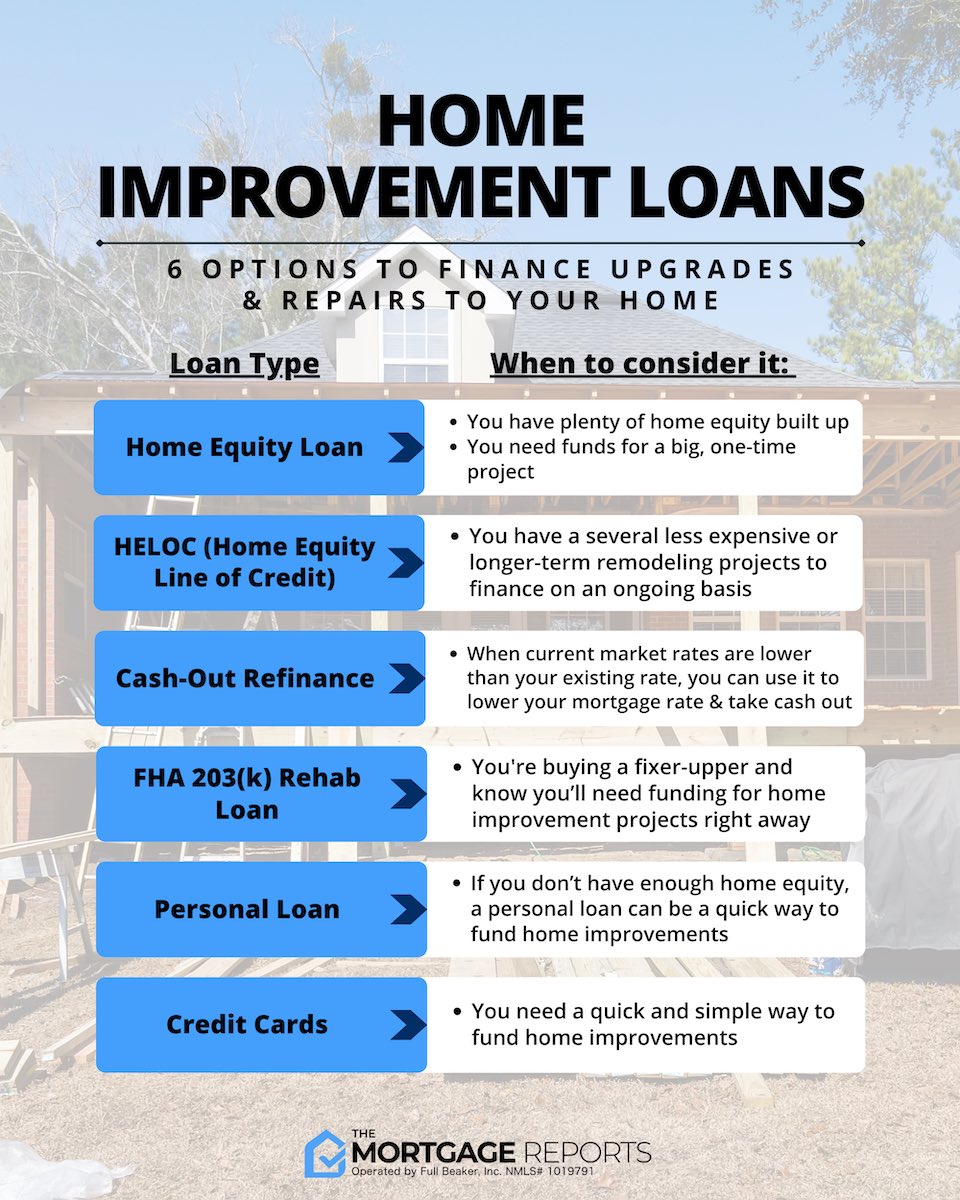
When evaluating your options, it helps to categorize them by how they are structured. The following list outlines the most common ways Missourians fund their renovations:
- Personal Loans: These are unsecured and highly flexible. They are ideal for quick projects and do not put your home at risk.
- Home Equity Loans: These provide a lump sum of cash based on your home’s value. They offer lower rates but require collateral.
- HELOCs (Home Equity Lines of Credit): These function like a credit card against your home’s equity. You draw funds as you need them.
- Cash-Out Refinancing: You replace your existing mortgage with a new, larger one, taking the difference in cash. This is a much more complex process.
The speed of funding is a massive factor for many. If a contractor needs a deposit by Friday, a traditional home equity loan might be too slow. Online lenders have streamlined the verification process to offer much faster turnaround times. This competition keeps the market active and provides better terms for borrowers who have solid credit scores.
You can often find personalized offers that can reach up to $100,000. It is important to remember that checking these offers through certain platforms won’t hurt your credit score. This allows you to shop around to see what you actually qualify for before making any hard decisions.
The availability of these products depends heavily on your financial health. Credit score, income, and existing debt all play a role in the final decision. If you need to see what the market currently offers, visiting Acorn Finance is a practical way to get a sense of your options without impacting your rating.
The Impact of State Regulations and Interest Rates
Missouri’s regulatory environment plays a significant role in how much you might pay for your money. Notably, Missouri has no usury cap for licensed consumer lenders. This lack of a cap makes the state a very competitive environment for lenders. Competition often works in the borrower’s favor, as companies fight for your business by offering more attractive terms.
However, competition is a double-edged sword. While it drives down rates for high-quality borrowers, it also means you have to be more diligent in your research. You cannot simply accept the first offer you receive. The variety of lenders, from local credit unions to massive national fintech firms, means the terms can vary wildly.
Local options, such as those offered through Mainstreet CU, might provide a more personalized experience. These local institutions often understand the specific real estate market in the Kansas City area better than a national algorithm might. They can sometimes offer more nuanced terms based on your relationship with the credit union.
Interest rates are never static. They are influenced by the broader economy and Federal Reserve decisions. This means the “best” loan today might be a different deal six months from now. It is wise to monitor these shifts if you are planning a major renovation that is still a year or two away.
Understanding these economic levers helps you time your borrowing. If you can wait until rates dip, you save money. If you need the work done now to prevent further damage, you pay the premium for speed. Timing is everything.
When looking at the math, do not just look at the monthly payment. Look at the total cost of the loan over its entire lifespan. A loan with a low monthly payment might actually cost you more in the long run if the term is exceptionally long.
Use a comparison table to keep your research organized. This prevents “analysis paralysis” when you are staring at a dozen different interest rates and terms. It is easy to get lost in the numbers.
| Loan Type | Collateral Required? | Interest Rate Trend | Approval Speed |
| Personal Loan | No | Moderate | Very Fast |
| Home Equity Loan | Yes | Low | Slow |
| HELOC | Yes | Variable | Moderate |
| Cash-Out Refi | Yes | Low | Very Slow |
Evaluating Your Debt Capacity for Renovations
Before you sign a loan agreement, you must determine how much debt you can actually handle. This is where many homeowners stumble. They see a high limit and a low monthly payment and assume they can afford the upgrade. But a renovation is often just the start of a series of expenses.
Home improvements should ideally increase the value of the property. If you are spending $50,000 on a new roof and a deck, you want to ensure those upgrades actually reflect that cost in your home’s market value. If the math doesn’t work, you are essentially losing money on the renovation, even if you pay the loan back in full.
Debt-to-income (DTI) ratio is a metric you cannot ignore. Lenders look at this to see how much of your monthly income is already spoken for by other debts. If your DTI is already high, you might find that even with a good credit score, the interest rates offered to you are less than favorable. This is why many people wait until they have paid down some credit card debt before applying for a renovation loan.
Consider the “worst-case” scenario for your monthly budget. If your income were to drop or interest rates on a variable loan were to rise, can you still make the payments? This is especially important for those opting for a HELOC. Because the rate is variable, your payment can change even when you haven’t borrowed any more money.
A smart strategy involves looking for lenders who offer fixed rates for personal loans. This provides a level of certainty that variable rates simply cannot match. You want to know exactly what your payment will be in month 36 or month 60. Predictability is a luxury in personal finance.
Finally, check for any prepayment penalties. Some loans charge you a fee if you try to pay them off early. If you expect to receive an inheritance or a bonus and want to wipe out your debt, you don’t want to be penalized for being fiscally responsible. Always read the fine print on these specific clauses.
It takes effort to shop around, but the savings are worth it. A little bit of research today can save you thousands of dollars over the next decade. Don’t rush the process.
Whether you choose a fast, unsecured personal loan to fix a broken window or a long-term home equity loan for a complete remodel, the key is matching the tool to the task. Missouri provides a robust market for both, but the responsibility for choosing the right one remains entirely with the homeowner. If you want to go deeper, Missouri Lend is a solid place to start.